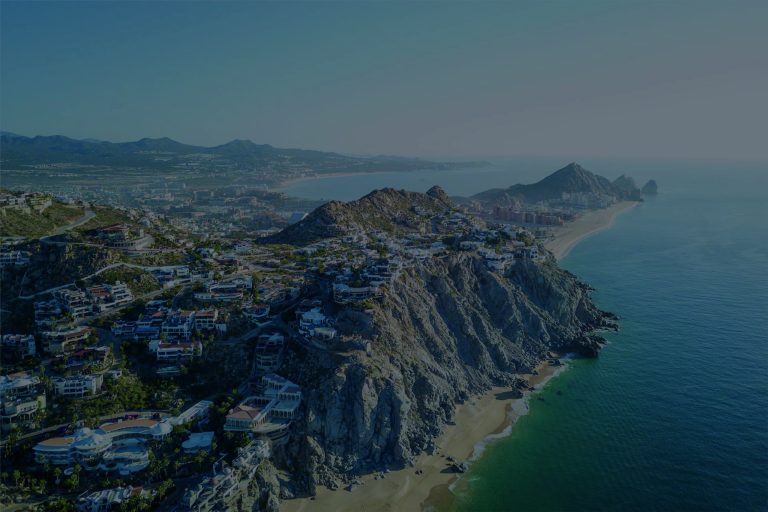
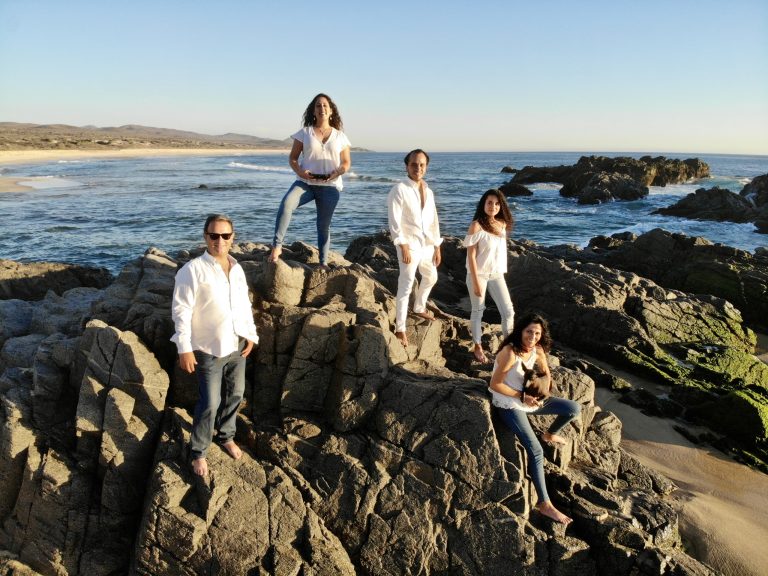
Yes. Americans, Canadians and other foreign nationals can legally own residential property in Los Cabos, with the full rights of an owner: live in it, rent it, remodel it, sell it and leave it to your heirs. Because Los Cabos sits inside Mexico’s restricted zone, foreign buyers hold title through a fideicomiso, a renewable 50-year bank trust authorized by Mexico’s Ministry of Foreign Affairs (SRE). It is a routine, constitutionally grounded structure, not a workaround, and it has been used in virtually every foreign purchase on Mexico’s coasts for the last five decades.
Yes, Americans and Canadians can own property in Los Cabos
The framework is neither new nor experimental. Mexico created the fideicomiso in the early 1970s precisely so foreigners could invest in coastal real estate, and the 1993 Foreign Investment Law consolidated it. The mechanics are standardized: a Mexican bank holds the deed as trustee, and you, the beneficiary, control every economic and practical right attached to the property.
What trips buyers up is not the law. It is the process: a Spanish-language civil-law system, a notario whose role is nothing like a U.S. notary, cross-border wire transfers, and due diligence rules that differ from anything you have signed in the U.S. or Canada. This guide walks through each step the way our in-house legal team runs it, with real timelines, real costs and the failure points we see most often.
What is Mexico’s restricted zone?
Article 27 of the Mexican Constitution bars foreigners from holding direct title to land within 100 km of an international border or 50 km of any coastline. That band is the restricted zone, and all of Los Cabos sits inside it.
The restriction dates to 1917 and was written for geopolitical reasons; the fideicomiso is the instrument Mexico built to open coastal real estate to foreign buyers without amending the Constitution. Two compliant paths exist:
- Fideicomiso (bank trust) — the standard route for residential property and for individual buyers.
- Mexican corporation — a Mexican entity, even one 100% foreign-owned, can hold direct title in the restricted zone for non-residential purposes.
Fideicomiso vs. Mexican corporation: which one do you need?
For most buyers this decision takes five minutes, but it is worth getting right, because unwinding the wrong structure later is expensive.
Choose a fideicomiso if:
- You are buying a home, condo or vacation property for personal use, or one you will rent part of the year.
- You want the simplest annual obligation: one trustee fee, no corporate filings.
- Estate planning matters to you. The trust names substitute beneficiaries, so the property transfers on death without Mexican probate.
Consider a Mexican corporation if:
- You are acquiring several properties as a genuine business — a development project or a commercially operated portfolio.
- The intended use is non-residential: commercial premises, land for an operating business.
- You accept monthly accounting and tax filings, which add real recurring cost and obligations.
A corporation is not a shortcut to “skip the trust.” Corporations may hold restricted-zone property for non-residential purposes; parking a personal vacation home inside one creates tax and compliance exposure that outweighs the trustee fee it saves. For the full mechanics of the trust — parties, renewals, beneficiary rights — read what is a fideicomiso — full guide.
The buying process, step by step (60–90 days)
A typical Los Cabos closing runs 60 to 90 days from accepted offer to recorded deed. Cash deals land at the short end; the trust permit and bank setup usually set the pace.
1. Offer and purchase agreement
Offers are presented in writing, usually in USD. Once accepted, both parties sign a purchase agreement that fixes price, deposit (typically 10%), contingencies, closing date and penalties. This contract governs the deal until closing, so it should be drafted or reviewed by your lawyer — not just by the listing agent.
2. Escrow — never wire funds directly to the seller
Mexican law does not require escrow, which is exactly why you must insist on it. Reputable Los Cabos closings run through third-party escrow companies with segregated USD accounts; funds are released only when the notario confirms the conditions of transfer are met. Wiring a deposit, let alone a balance, straight to a seller or developer removes every safety net you have.
3. Legal due diligence: title, liens, ejido
Before any permit is requested, your lawyer verifies the chain of title and pulls a no-lien certificate from the Public Registry, confirms property taxes and HOA dues are current, checks that the land has no unresolved ejido origin, and confirms the construction matches its permits. In Los Cabos, this stage catches most of the problems that otherwise become lawsuits.
4. Fideicomiso permit (SRE) and bank trust setup
Your closing team applies for the trust permit from the Ministry of Foreign Affairs (SRE) and negotiates the trust agreement with the trustee bank. You designate the beneficiaries — yourself, jointly with a spouse, or an entity — and name substitute beneficiaries who inherit the trust rights directly. Permit and bank processing typically take several weeks and run in parallel with due diligence.
5. The notario público — and why it is not a U.S. notary
This is the gap that confuses nearly every American buyer. A Mexican notario is a senior, government-commissioned attorney with exclusive authority to formalize real estate transfers. The notario drafts the escritura (deed), calculates and withholds the transaction taxes, and records the transfer. What the notario does not do is represent you: the notario is impartial by law. Buyers who treat the notario as their counsel effectively close unrepresented. Bring your own lawyer, or work with a brokerage that has one on staff.
6. Closing and escritura
All parties sign before the notario, escrow releases the funds, and the deed — with the trust — is recorded at the Public Registry. You receive the escritura evidencing your beneficiary rights. From that moment the property is yours to occupy, rent or resell.
What it really costs
Budget for closing costs on top of the price. In Los Cabos, the buyer pays most of them:
- Acquisition tax (ISAI): 3% of the higher of the purchase price or the assessed value — the rate across all of Baja California Sur as of 2026.
- Notario fees: typically 0.6%–1.2% of the price, plus VAT.
- Public Registry and certificates: roughly 0.5%–1% combined.
- Fideicomiso setup: typically US$2,000–$3,000 (SRE permit, bank acceptance, first year’s trustee fee), then US$500–$800 per year.
- Escrow fee: typically US$500–$1,000.
All-in, most foreign buyers land between 4% and 6% of the purchase price (optional title insurance adds 0.5%–0.7%) — the lower the price, the higher the percentage, because the fixed trust and escrow costs weigh more. Run your own numbers with our closing costs guide and calculator before you sign anything.
Where buyers get hurt
Ejido land. Large parts of Baja California Sur began as communal agrarian land. Ejido parcels cannot legally be sold to private buyers until they complete full privatization (dominio pleno). Every year buyers wire money for “titled” ejido land at prices that look like bargains; those sales are voidable, and the money is rarely recovered. Title verification is not optional here.
Presales without contract review. Los Cabos has an active development pipeline and presale pricing carries real value — but the contract is everything: delivery date and penalties, where your deposits sit, the exact finish specs. Deposits should be escrowed or bonded, not handed to the developer unsecured.
Closing without independent counsel. The notario is neutral and the listing agent works for the seller. Independent legal review is the cheapest insurance in the entire transaction.
A note for Canadian buyers
The rules are identical: same restricted zone, same fideicomiso, same SRE permit. The differences are practical. Los Cabos transactions are priced and settled in USD, so plan your CAD-to-USD conversion as part of the budget. Rental income must be declared in both countries, with the Canada–Mexico tax treaty generally providing credits against double taxation. Los Cabos consistently ranks among the top destinations Canadians search for property abroad, and a growing share of our closings are Canadian files.
Where should you buy?
Zone drives lifestyle, rental profile and price per square meter more than any other variable. Cabo San Lucas concentrates the marina, the nightlife and the strongest short-term rental demand. San José del Cabo offers the historic district, the arts scene and a quieter, more residential pace. The East Cape is where privacy, new master-planned communities and long-horizon value meet. Compare current inventory across every zone in our properties for sale in Los Cabos.
How Ramar closes for you, in-house
Most brokerages hand you a referral list — a lawyer here, an accountant there, an escrow company somewhere else — and leave you to coordinate them. Ramar is the only brokerage in Los Cabos with in-house legal and accounting teams: the same people who negotiate your offer run the due diligence, obtain the SRE permit, coordinate escrow and the notario, and structure your fideicomiso, from offer to recorded escritura. One accountable team, one timeline, no gaps between vendors. Start with our buyer’s manual for the complete checklist.
Frequently asked questions
More answers on our FAQ page.
Can a U.S. citizen buy a house in Cabo?
Yes. U.S. citizens buy Los Cabos property every day through a fideicomiso, a renewable 50-year bank trust that grants full ownership rights: use, rental income, resale and inheritance. No Mexican residency or visa is required to own.
How long does a fideicomiso last — and can it be renewed?
The trust term is 50 years, renewable indefinitely for successive 50-year periods. Renewal is a filing, not a repurchase; your rights continue uninterrupted, and when you sell, the buyer can take over the existing trust.
Can the bank take my property?
No. The property is not an asset of the bank. Trust assets are segregated by law from the trustee’s balance sheet; if the bank ever failed, the trust would be transferred to another trustee with your rights intact.
What happens to my property when I die?
Your named substitute beneficiaries take over the trust rights directly — no Mexican probate and no court process. It is one of the fideicomiso’s most underrated advantages, and the reason beneficiary designations deserve real thought at setup.
Do I need a lawyer, or is the notario enough?
You need a lawyer. The notario formalizes the transaction and is impartial by law, so nobody in the standard process defends your interests unless you bring counsel. Ramar solves this structurally: our legal team is in-house and works your file through the entire closing.
Planning a purchase in 2026? Talk to our legal team — one consultation will tell you exactly what your closing will look like, what it will cost and how long it will take.
Buying in Los Cabos?
Talk to the team with in-house legal and accounting — from the search to the keys.